
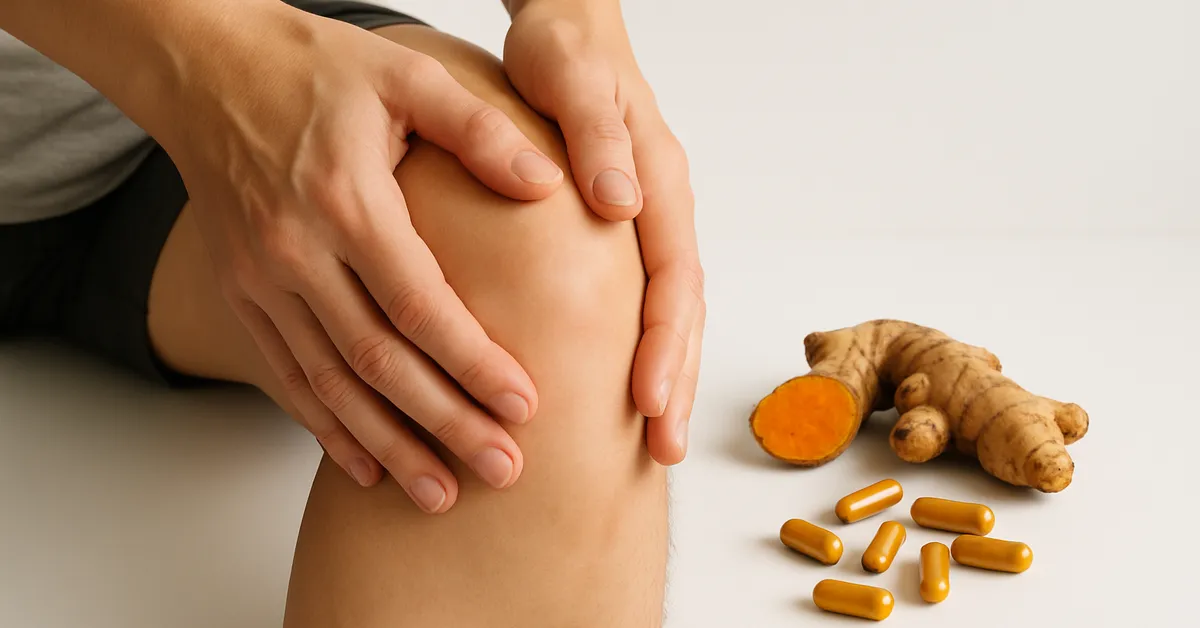
Joint pain affects millions of people worldwide, and for many, it becomes a daily limitation that affects quality of life, sleep, and overall wellbeing. While pharmaceutical options exist, they come with side effects that concern many patients. Turmeric – specifically its active compound curcumin – has emerged as one of the most researched natural alternatives.
This guide covers everything we know from the science about turmeric and joint pain.
Understanding Joint Pain and Inflammation
Most joint pain has inflammation at its core. Whether it’s osteoarthritis (the wear-and-tear kind) or rheumatoid arthritis (the autoimmune kind), the common thread is an inflammatory response that damages joint tissue and triggers pain receptors.
This is why anti-inflammatory approaches – whether pharmaceutical or natural – are central to joint pain management. NSAIDs like ibuprofen and naproxen work by blocking specific inflammatory enzymes (COX-1 and COX-2). They work well short-term but come with gastrointestinal, cardiovascular, and kidney risks with long-term use.
Curcumin takes a broader approach, inhibiting multiple inflammatory pathways simultaneously. Research suggests it targets NF-kB, COX-2, LOX, and several inflammatory cytokines. This multi-pathway approach may explain why clinical trials consistently show it effective for joint pain.
The Research: What Clinical Trials Actually Show
Study 1: Curcumin vs. Diclofenac for Rheumatoid Arthritis
One of the most cited studies on curcumin and joint pain was published in Phytotherapy Research (2012). Researchers divided 45 RA patients into three groups: curcumin alone (500mg), diclofenac sodium (a common NSAID) alone, and a combination of both.
Results were striking: the curcumin group showed the highest percentage of improvement in the DAS (Disease Activity Score) and ACR criteria. The curcumin group showed better improvements than the diclofenac group alone, with no adverse effects.
Study 2: Curcumin vs. Ibuprofen for Knee Osteoarthritis
A 2014 study published in the Clinical Interventions in Aging journal compared curcumin extract (1,500mg daily) to ibuprofen (1,200mg daily) in 367 patients with knee osteoarthritis over a 4-week period.
Pain scores improved similarly in both groups. However – the curcumin group had significantly fewer gastrointestinal adverse events. For anyone who’s dealt with the stomach issues that come with long-term NSAID use, this is a meaningful finding.
Study 3: Long-term Curcumin for Osteoarthritis
A 2016 systematic review in the Journal of Medicinal Food looked at 8 randomized controlled trials on curcumin for joint conditions. The review concluded that curcumin supplementation showed consistent effectiveness across studies for reducing joint pain and improving function. For a deeper look at what to look for in a quality product, see this guide to the best turmeric supplement for joint pain.
Studies with longer duration (8+ weeks) tended to show stronger effects, suggesting that curcumin’s benefits build over time rather than being immediately apparent.
Study 4: Curcumin for Morning Stiffness
Morning stiffness is one of the most debilitating symptoms for arthritis sufferers. A trial examining curcumin supplementation specifically measured this outcome and found significant reductions in morning stiffness duration and severity compared to placebo.
How to Take Turmeric for Joint Pain
Dose
Most clinical trials showing benefits for joint pain used curcumin doses between 500mg and 2,000mg per day. The sweet spot for most people seems to be around 1,000mg of high-quality curcumin extract daily.
Important: these doses refer to curcumin extract (typically standardized to 95% curcuminoids), not raw turmeric powder. Turmeric powder is only about 2-3% curcumin by weight, so you’d need enormous amounts to reach therapeutic doses.
Bioavailability is Everything
Curcumin is notoriously poorly absorbed. Standard curcumin has low oral bioavailability – most of it passes through your digestive system without being absorbed into circulation.
To actually get the joint pain benefits, you need one of these bioavailability solutions:
- Piperine (black pepper extract): The most common and well-studied approach. Piperine inhibits the enzyme that breaks down curcumin, increasing absorption by up to 2,000%. Look for supplements that include 5-10mg of piperine per dose.
- Phospholipid complexes (Meriva, Phytosome): Curcumin bound to phospholipids shows dramatically improved absorption compared to standard extracts.
- Liposomal curcumin: Encapsulating curcumin in liposomes (fat-based carriers) significantly improves bioavailability.
- Longvida: A patented solid lipid particle formulation showing superior brain and tissue distribution.
Timing and Consistency
Take curcumin with your largest meal of the day – ideally one containing healthy fats. Consistency matters more than timing; taking it daily for 6-8 weeks gives the best results.
Don’t expect overnight results. Most people start noticing improvements after 2-4 weeks of consistent supplementation, with full effects often taking 6-8 weeks.
Turmeric vs. Common Joint Pain Medications
Curcumin is not a fast-acting pain reliever. It’s better thought of as a long-term, low-risk approach to managing inflammatory joint pain. Many people use it as a foundation, adding faster-acting options when needed for flares. For long-term daily use, curcumin’s safety profile is significantly better than NSAIDs: less GI risk, no cardiovascular risk increase, and no kidney concerns.
Combining Turmeric with Other Natural Joint Support
Turmeric works well alongside other evidence-backed approaches to joint health:
- Boswellia: Another potent natural anti-inflammatory that works on different pathways. The combination with curcumin shows synergistic effects in some studies.
- Omega-3 fatty acids: Fish oil’s EPA and DHA are well-documented anti-inflammatories. Combining with curcumin addresses inflammation from multiple angles.
- Glucosamine and chondroitin: These support cartilage health rather than just reducing inflammation. Good complements to curcumin.
- Exercise: Counterintuitive but crucial. Appropriate low-impact exercise (swimming, cycling, walking) improves joint fluid circulation and reduces inflammation over time.
Who Should Be Cautious
Turmeric is generally very safe, but some people should use caution:
- People on blood thinners: Curcumin has mild anticoagulant properties. Consult your doctor if you’re on warfarin, heparin, or other anticoagulants.
- Pre-surgical patients: Stop curcumin supplementation 2 weeks before any surgery due to blood-thinning effects.
- Gallbladder disease: Curcumin stimulates bile production, which can be problematic with existing gallbladder issues.
- Pregnancy: High-dose curcumin supplements are not recommended during pregnancy.
Final Verdict
The evidence is genuinely compelling. Across multiple well-designed trials, curcumin consistently shows meaningful reductions in joint pain and improved function – often comparable to NSAIDs, but with a much better safety profile for long-term use.
It’s not a cure. It won’t rebuild damaged cartilage. But as a tool to reduce inflammatory pain and improve day-to-day joint function, the research is solid enough that it deserves a serious look.
Ready to find the best option? See our recommendations for the best turmeric supplements for joint pain.