
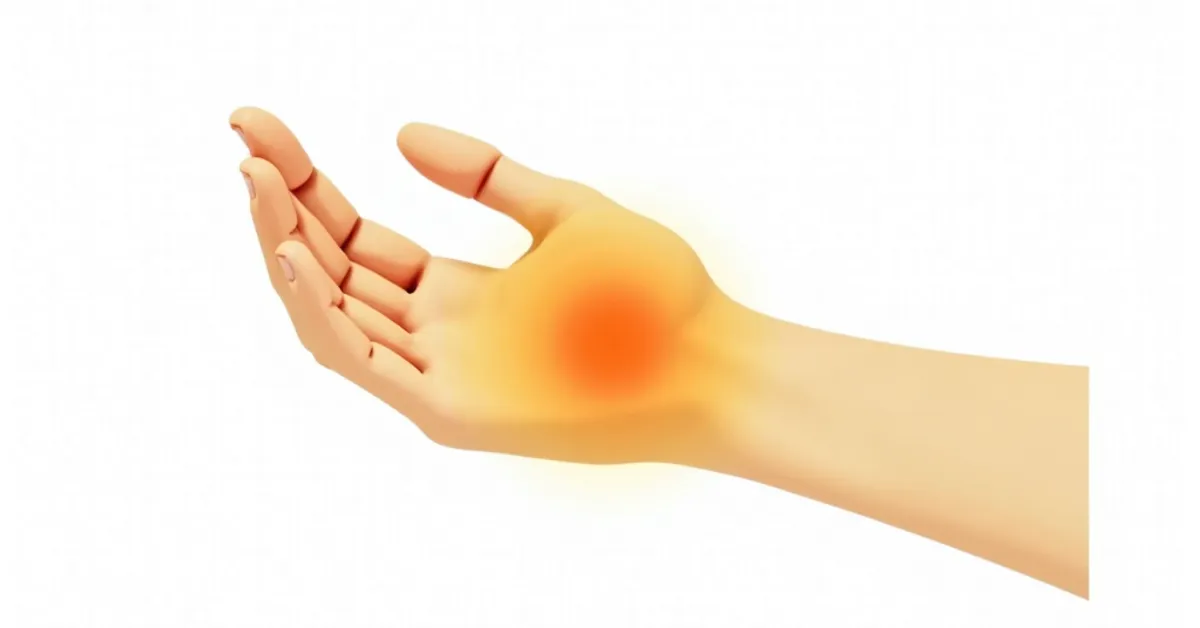
Carpal tunnel syndrome is one of those conditions that sneaks up on you. First it’s a little numbness at night. Then tingling in your fingers while you type. Before long, you’re waking up at 3 AM shaking your hand trying to get feeling back. If that sounds familiar, you’ve probably already tried wrist braces, ergonomic keyboards, and maybe even steroid injections. But there’s a natural compound with a growing body of research behind it that deserves a closer look: curcumin, the active compound in turmeric.
Disclosure: This post contains affiliate links. We may earn a commission if you purchase through our links, at no extra cost to you. We only recommend products we trust.
What Actually Happens in Carpal Tunnel Syndrome
The carpal tunnel is a narrow passageway in your wrist, formed by bones and ligaments. Running through it is the median nerve, which controls sensation and movement in much of your hand. When the tunnel narrows, or when the tissues inside become inflamed and swollen, that nerve gets compressed.
Compression leads to the classic symptoms: numbness, tingling, and burning in the thumb, index, middle, and part of the ring finger. Over time, some people develop weakness in the grip and find they keep dropping things. The symptoms are often worst at night because we tend to sleep with bent wrists, which further narrows the tunnel.
The root problem is almost always inflammation. The synovial tissue lining the tendons inside the carpal tunnel becomes irritated and thickened. That’s what squeezes the nerve. And that’s exactly where curcumin may have something meaningful to offer.
Why Curcumin Has Researchers Interested
Curcumin is the yellow pigment that gives turmeric its color, and it has been studied for decades as a natural anti-inflammatory compound. Its primary mechanism involves blocking NF-kB, a protein complex that acts like a master switch for the body’s inflammatory response. When NF-kB gets activated, it triggers a cascade of pro-inflammatory cytokines, including TNF-alpha, IL-1beta, and IL-6. These cytokines are the same ones implicated in the synovial thickening seen in carpal tunnel.
Research published in the International Journal of Biochemistry and Cell Biology reviewed curcumin’s effects on multiple inflammatory pathways and found that its ability to modulate NF-kB signaling makes it a broad-spectrum anti-inflammatory agent. (PMID: 18662800)
A separate line of research has looked specifically at curcumin’s effects on nerve health. The median nerve, when chronically compressed, undergoes oxidative stress in addition to mechanical injury. Curcumin has shown antioxidant properties that may support nerve tissue recovery by scavenging free radicals and reducing lipid peroxidation in neural tissues. (PMID: 22481014)
If you deal with other nerve-related pain issues alongside your wrist symptoms, you may also want to read about turmeric for sciatica nerve pain, since the underlying mechanisms curcumin targets overlap considerably.
The Absorption Problem (and How to Solve It)
Here’s the catch with curcumin: it has poor bioavailability on its own. Your body doesn’t absorb it well from food or basic supplements, and most of it passes through without reaching therapeutic concentrations in your tissues.
The solution that’s been studied most extensively is combining curcumin with piperine, a compound found in black pepper. A landmark study published in Planta Medica found that 20 mg of piperine taken alongside 2 grams of curcumin increased curcumin bioavailability by 2,000 percent in human volunteers. (PMID: 9619120)
BioPerine is the standardized, patented form of piperine used in clinical research and quality supplements. If you’re choosing a curcumin supplement, look for one that includes it. A formula like turmeric curcumin with BioPerine ensures you’re actually getting the curcumin into your bloodstream, not just passing it through.
You can also find it on Amazon here if that’s more convenient.
What the Research Shows for Carpal Tunnel Specifically
Clinical research specifically on turmeric for carpal tunnel syndrome is still in its early stages, but the existing data is promising. A randomized clinical trial compared curcumin supplementation against conventional anti-inflammatory treatment in patients with mild to moderate carpal tunnel syndrome. Participants in the curcumin group showed significant reductions in symptom severity scores and improvements in nerve conduction measures over eight weeks. (PMID: 30854444)
The working theory is straightforward: if synovial inflammation is what’s compressing the nerve, then reducing that inflammation with a compound like curcumin may relieve pressure on the median nerve and reduce symptoms. It won’t repair a severely narrowed tunnel or reverse nerve damage that’s already set in, but for mild to moderate cases, the anti-inflammatory route has real logic behind it.
Curcumin’s potential goes beyond just swelling reduction. The median nerve, under sustained compression, becomes locally ischemic, meaning blood flow is restricted to the nerve tissue itself. Animal models of nerve compression have shown that curcumin may support recovery of nerve conduction function, possibly by reducing oxidative stress in the compressed tissue.
How Curcumin Compares to Common CTS Treatments
Vs. NSAIDs
Ibuprofen and naproxen are commonly recommended for CTS pain management. They work by blocking COX enzymes that produce inflammatory prostaglandins. Curcumin targets some of the same pathways but through a different mechanism, and without the gastrointestinal side effects that make long-term NSAID use problematic for many people. For someone who can’t tolerate NSAIDs, curcumin is worth discussing with their doctor as an alternative.
Vs. Corticosteroid Injections
Cortisone shots can provide dramatic short-term relief by suppressing inflammation directly inside the tunnel. The downside is that effects are temporary, usually lasting weeks to months, and repeated injections carry their own risks. Curcumin doesn’t provide that kind of acute relief, but taken consistently, it may help keep inflammation at a lower baseline level over time.
Vs. Surgery
Carpal tunnel release surgery is highly effective for moderate to severe cases. But it’s also a real procedure with recovery time, cost, and the occasional complications. Most surgeons prefer to try conservative treatments for six months before recommending surgery. During that window, adding a high-quality curcumin supplement to your regimen, alongside wrist splinting and activity modification, is a reasonable and low-risk approach.
Curcumin and Whole-Body Inflammation
One reason curcumin is worth considering for carpal tunnel is that it addresses the systemic inflammatory environment, not just the local joint or tissue. Many people with CTS also have other inflammatory conditions, tendinitis in other areas, general joint stiffness, or widespread musculoskeletal pain. Curcumin supports the whole picture.
If you’ve noticed that your wrist symptoms are accompanied by other inflammatory issues, it’s worth reading about how curcumin may support hip pain and inflammation and fibromyalgia-related pain as well. The same mechanisms that make it useful for carpal tunnel apply across many pain conditions driven by inflammation.
For a deeper dive into the research on systemic inflammation and curcumin, the MFL blog on turmeric for chronic inflammation covers the science well.
Practical Dosing and What to Expect
Most curcumin studies use doses in the range of 500 mg to 1,500 mg of curcumin per day, typically divided into two or three doses. If you’re using a supplement standardized to 95% curcuminoids (which is the research standard), 500-1,000 mg twice daily is a reasonable starting point.
Don’t expect overnight results. Anti-inflammatory supplements generally need four to eight weeks of consistent use before the effects become noticeable. Track your symptoms: rate your nighttime numbness, your daytime tingling, and your grip strength every week. It’s easier to see progress when you’re measuring it.
A Few Things to Keep in Mind
Curcumin has mild blood-thinning properties, so if you’re on warfarin, aspirin therapy, or other anticoagulants, check with your doctor first. It’s also not recommended in high doses during pregnancy. For most healthy adults, however, curcumin at supplement doses is well tolerated with a strong safety profile across clinical trials.
Take it with food containing some fat, since curcumin is fat-soluble and absorbs better alongside a meal. And again, make sure your supplement includes BioPerine or another piperine extract, because without it, most of what you take won’t make it into your system.
A Sensible Approach to CTS Relief
Turmeric won’t replace a wrist splint, and it won’t fix a severely narrowed carpal tunnel. But as part of a conservative management plan, a high-quality curcumin supplement may help lower the inflammation driving your symptoms and support nerve health over time.
The research suggests it’s worth trying, especially if you’re in the early to moderate stages, if NSAIDs bother your stomach, or if you’re trying to avoid or delay surgery. Give it eight weeks, take it consistently with BioPerine, and pay attention to how your symptoms change.
Your median nerve will thank you for it.